You stand over a four-footer, make what feels like a clean stroke, and watch the ball slide past the edge. You blame the reader. You blame the grain. Nine times out of ten, the read was fine, and your hands moved.
Putting punishes small errors. The ball rolls slowly, the target is small, and the face angle at impact sets about 80% of the start line. Open the face by a single degree from six feet, and you catch the lip instead of the middle. That much movement can come from one twitch of the tail wrist.
The grip is the only part of the putter you hold. Get the shape and size right, and your hands have less room to ruin a good read.
For most golfers, a midsize putter grip with a straight, non-tapered profile gives the best accuracy. It reduces wrist action and helps the face stay square through impact. Choose the largest grip you can hold without losing feel for distance.
Why Grip Choice Matters More on the Greens
Every other club in the bag gets help from loft, speed, and turf interaction. A putt has none of that. The stroke is short, the hands are quiet, and any hand movement shows up immediately in the roll.
Change the grip and you change how much your hands are allowed to do. A thicker grip fills the palms and limits wrist hinge. A thinner one hands control back to the fingers. Neither is right for everyone, which is why two players of the same handicap can need opposite grips.
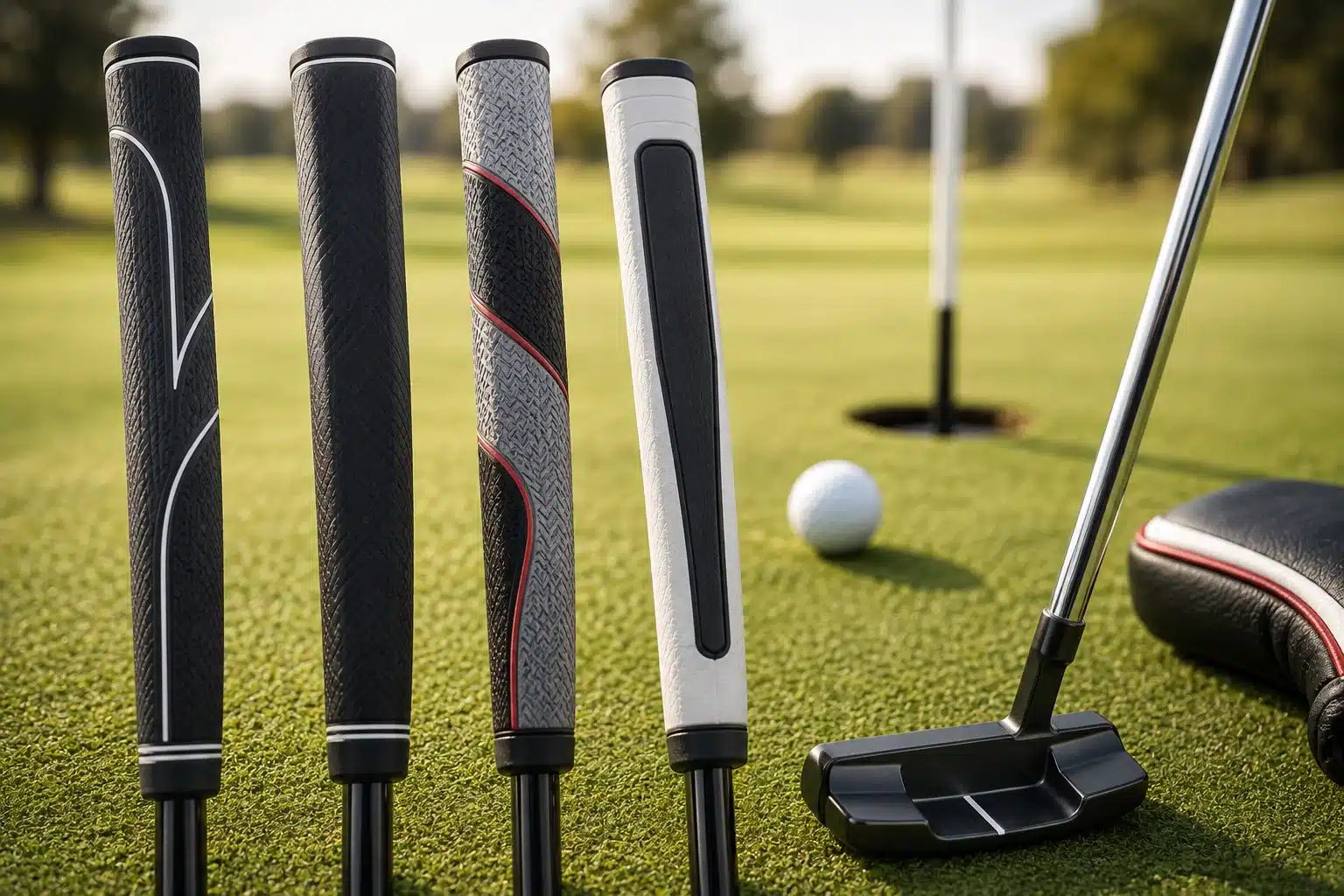
Grip Shapes and What Each One Does
| Shape | Feel | Best for |
| Pistol | Tapered, thicker at the top, classic profile | Players with an arced stroke who want feedback in the fingers |
| Straight (non-taper) | Same thickness top to bottom | Straight-back-straight-through strokes, quieting the right hand |
| Wrap | Softer, textured, slightly tacky | Cold or wet mornings, players who grip too tight |
| Flat front | Wide flat panel for the thumbs | Setting the hands the same way every time |
Pistol grips are what most putters ship with. They sit low in the palm and let the trail hand work, which suits players who like to feel the head release.
Straight grips are the accuracy pick. The even profile spreads pressure across both hands, so neither one can take over. Golf Pride’s Tour SNSR range is built around this idea, and you will see straight profiles on a lot of tour bags for the same reason.
Getting the Size Right
Grip size changes how much wrist you use. Bigger grip, less wrist.
Standard. Thin, light, and full of feedback. Good if your speed control is sharp and your stroke is repeatable. Less forgiving if you get handsy under pressure.
Midsize. The middle ground is the safest choice for most club golfers. Enough thickness to settle the hands, enough feel to judge a 40-footer.
Oversize or jumbo. The most stable option. Takes the wrists almost out of the stroke and helps players who pull putts left. The trade-off is distance control. Long lag putts can start coming up short until you adjust.
Weight matters too. A jumbo grip adds around 50 to 100 grams to the hands, which changes the balance of the putter. Some players love the heavier, slower feel. Others find the head goes dead. Try before you commit.
Match the Grip to Your Miss
Work out your pattern first, then buy.
- Pulling putts left. Your trail hand is closing the face. Move up a size and try a straight profile.
- Pushing putts right. Often a grip that is too big for your hands. Drop to midsize.
- Speed is all over the place. Go thinner, not thicker. You need feedback, not stability.
- Twitchy under three feet. Oversized with a flat front. It gives the hands one job and one position.
- Cold or wet conditions. A wrap or corded texture holds up when a rubber grip goes slick.
Common Mistakes
Buying on looks. A grip that suits a tour player with a slow arc will not suit a fast, straight stroke.
Ignoring the head weight. Adding a heavy grip to a light blade can leave the putter feeling lifeless. Counterbalance it or size down.
Squeezing. Grip pressure should sit around four out of ten. A bigger grip that you strangle is worse than a thin one you hold softly.
Playing a worn grip for years. Rubber hardens and glazes. Once the tack is gone, your hands tighten without you noticing, and the stroke gets short and quick.
Changing everything at once. New putter, new grip, new stance. Change one thing, give it three rounds, then judge it.
Tips From the Fitting Bay
Test on six-footers, not on the practice green from 30 feet. Short putts expose face control fastest.
Hit ten putts with your current grip and mark where each one starts. Repeat with the new grip. You are looking for a tighter cluster, not more holed putts on the day.
Check that your grip is aligned straight. A putter grip, even slightly twisted, will aim the face for you, and not in a good way.
Re-grip your putter roughly every 40 rounds or once a season. It is the cheapest stroke you will ever save.
Shop the range
We stock Golf Pride putter grips in standard, midsize, and oversize, with fast US shipping and bulk pricing on multi-grip orders. Find your size at Golf Grip Hub and start rolling putts on your line.
FAQ
What size putter grip is best for accuracy?
Midsize suits most golfers. It calms wrist movement without killing feel for distance control.
Do oversize putter grips help you hole more putts?
They help players who pull putts. They can hurt lag putting until you adjust to the heavier feel.
Should the putter grip be thicker than my other grips?
Yes. Putter grips are wider by design and are the only grips allowed a flat side under the rules.
How often should I change my putter grip?
Once a season, or every 40 rounds. Replace sooner if the surface feels hard or slick.
Does a heavier grip change putter balance?
Yes. Extra weight above the hands slows the head and can steady a fast, wristy stroke.